Our next set of Awareness posts

In Uncategorised by John Geddes

Again, do please share these wherever appropriate

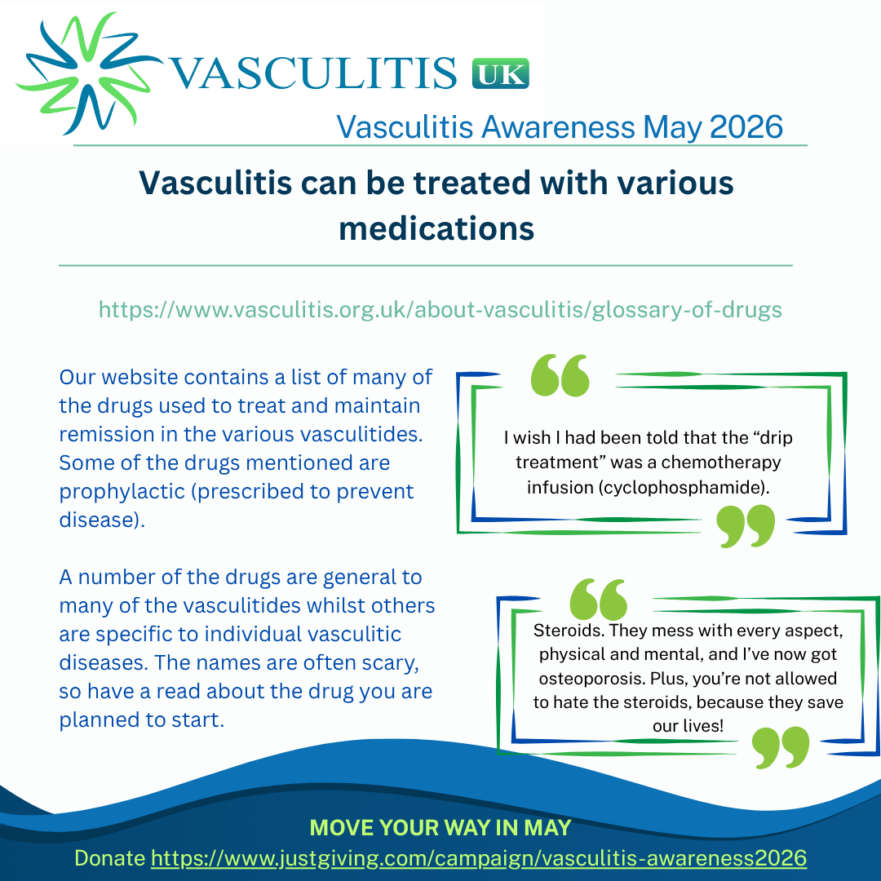
15. Vasculitis can be treated with various medications
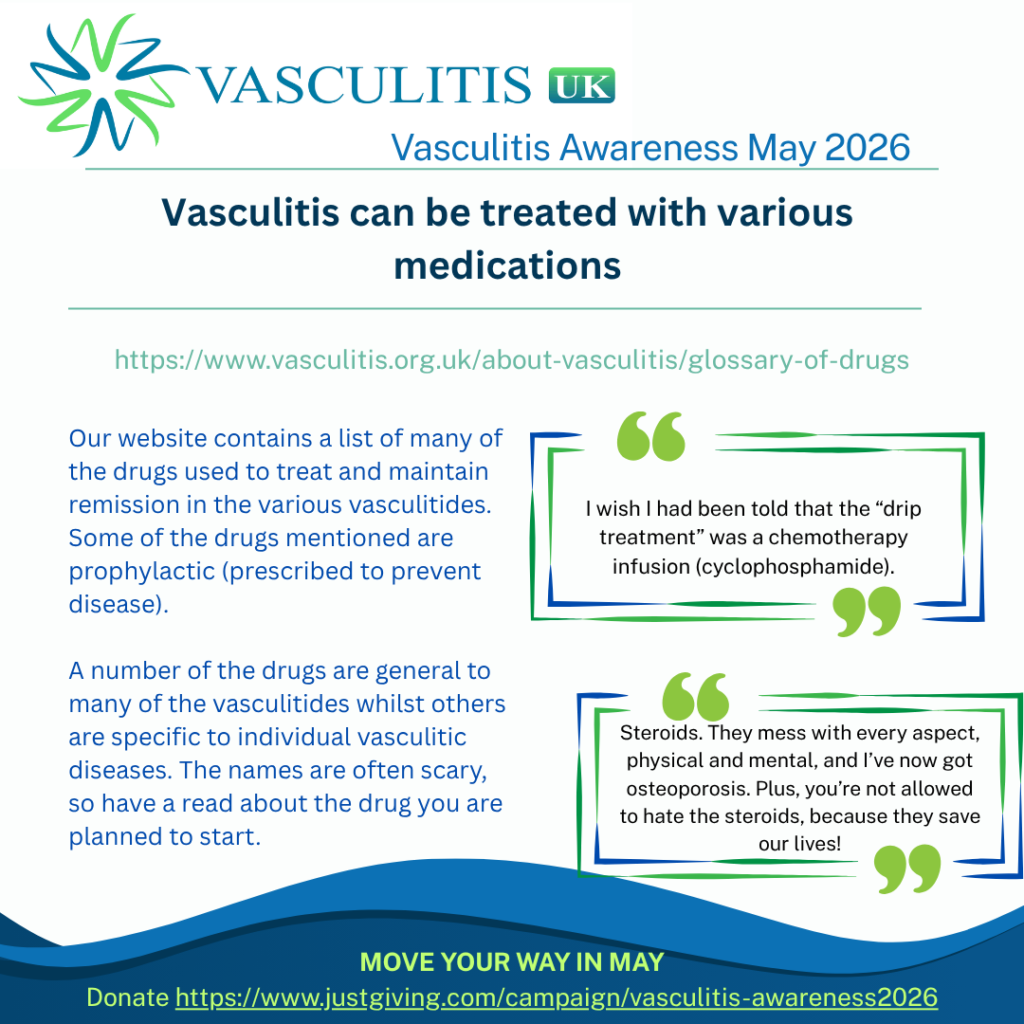
Our website contains a list of many of the drugs used to treat and maintain remission in the various vasculitides. Some of the drugs mentioned are prophylactic (prescribed to prevent disease). A number of the drugs are general to many of the vasculitides whilst others are specific to individual vasculitic diseases. The names are often scary, so have a read about the drug you are planned to start.

16. Symptoms can be very different from person to person
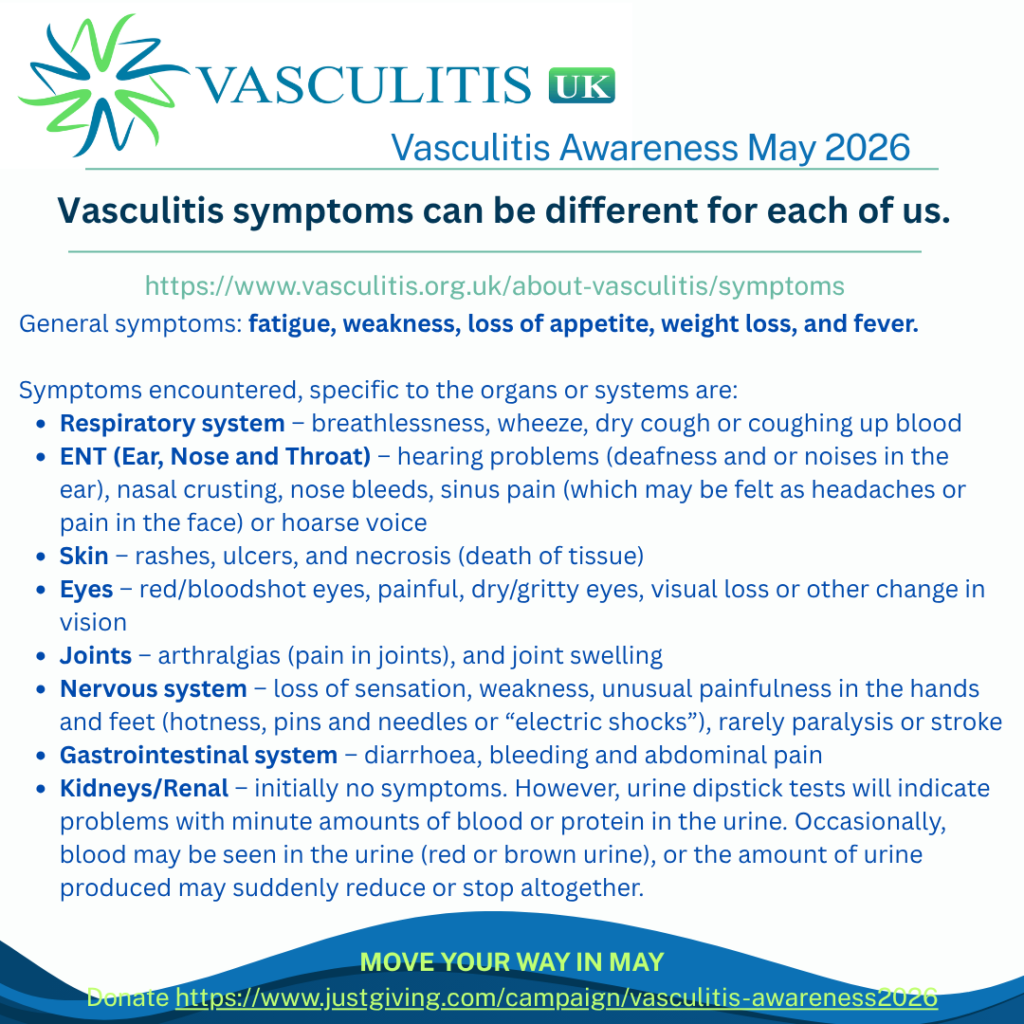
The symptoms caused by vasculitis will depend on the organs involved. However, some general symptoms include: fatigue, weakness, loss of appetite, weight loss, and fever. Unfortunately, many of these symptoms apply to other diseases, which makes it difficult to diagnose vasculitis. Some symptoms encountered, specific to various systems are: • Respiratory system – breathlessness, wheeze, dry cough or coughing up blood • ENT (Ear, Nose and Throat) – hearing problems (deafness and or noises in the ear), nasal crusting, nose bleeds, sinus pain (which may be felt as headaches or pain in the face) or hoarse voice • Skin – rashes, ulcers, and necrosis (death of tissue) • Eyes – red (blood shot) eyes, painful, dry or gritty eyes, visual loss or other changes in vision • Joints – arthralgias (pain in joints), and joint swelling • Nervous system – loss of sensation, weakness, unusual painful symptoms in the hands and feet (hotness, pins and needles or “electric shocks”) and rarely paralysis or stroke • Gastrointestinal system – diarrhoea, bleeding and abdominal pain • Kidneys/Renal – initially no symptoms. However urine dipstick tests will indicate problems with minute amounts of blood or protein in the urine. Occasionally blood may be seen in the urine (red or brown urine) or the amount of urine produced may suddenly reduce or stop altogether.

17. Common early symptoms include fatigue and general illness
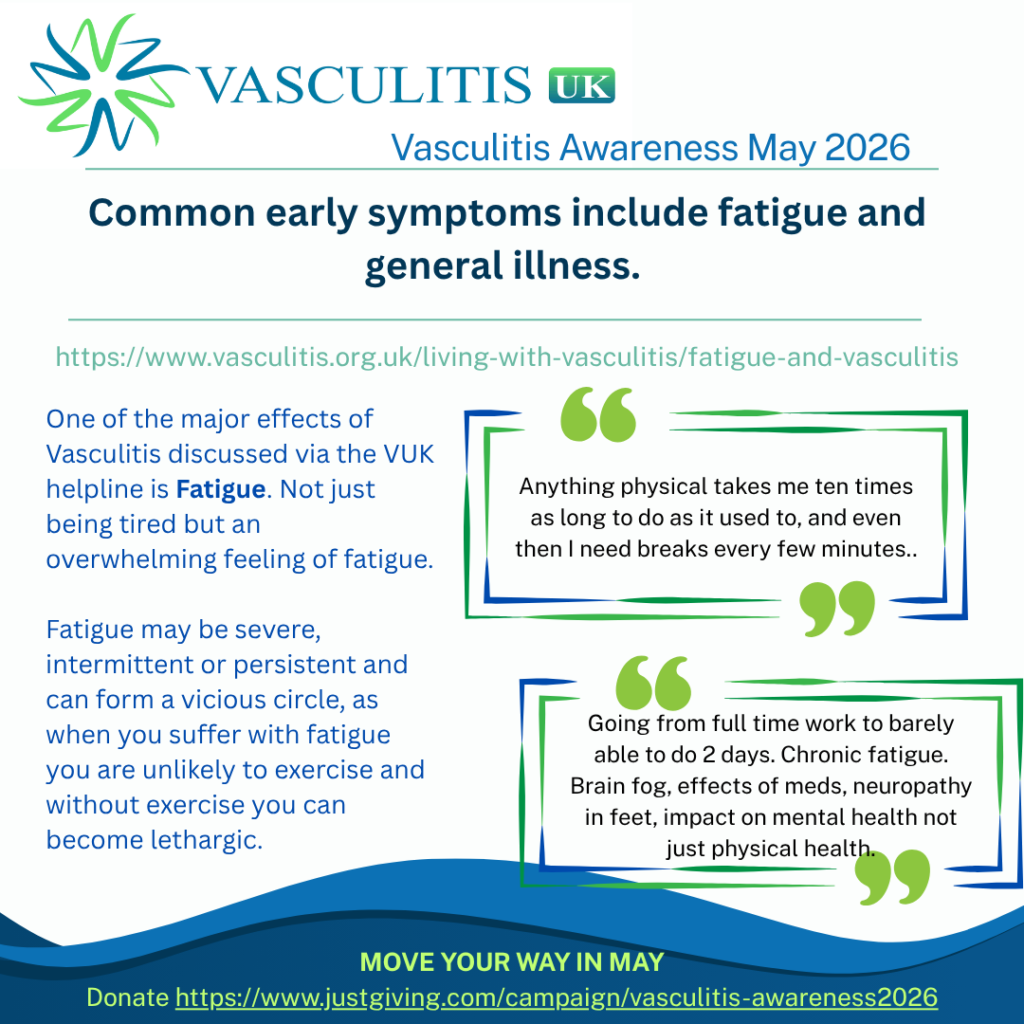
One of the major effects of Vasculitis discussed via the VUK helpline is Fatigue. Not just being tired but an overwhelming feeling of fatigue. Fatigue may be severe, intermittent or persistent and can form a vicious circle, as when you suffer with fatigue you are unlikely to exercise and without exercise you can become lethargic.

18. Vasculitis may cause skin rashes or bruising
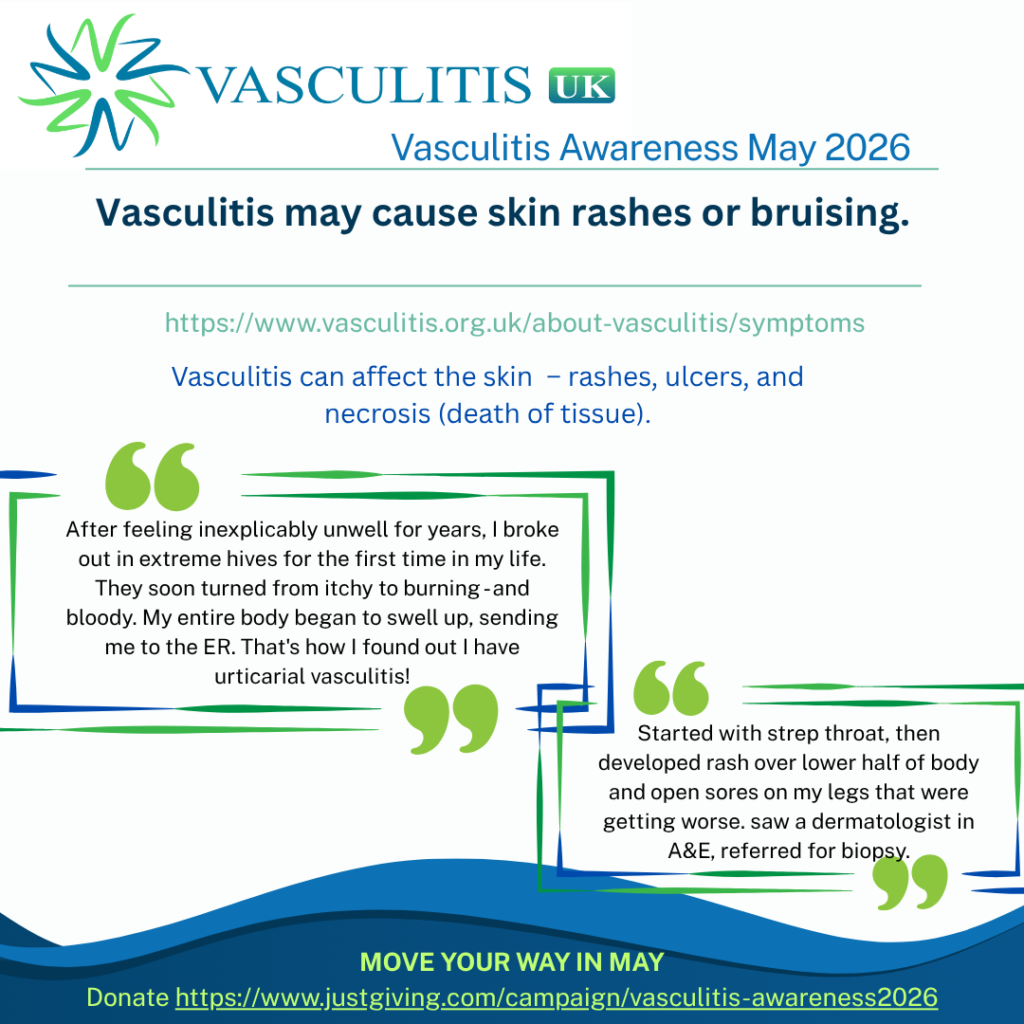
Vasculitis can affect the skin – rashes, ulcers, and necrosis (death of tissue).

19. Joint and muscle pain are common symptoms
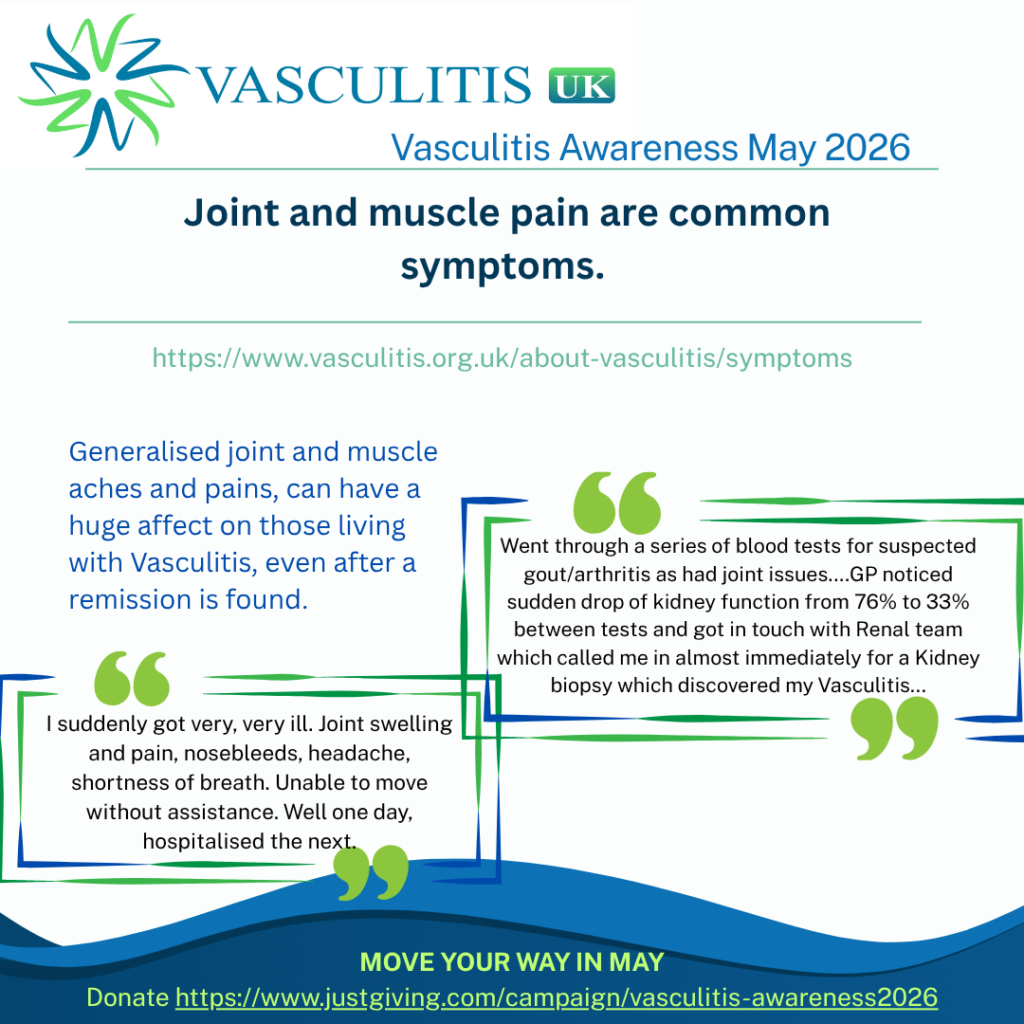
Generalised joint and muscle aches and pains, can have a huge affect on those living with Vasculitis, even after a remission is found.

20. Vasculitis can affect the kidneys
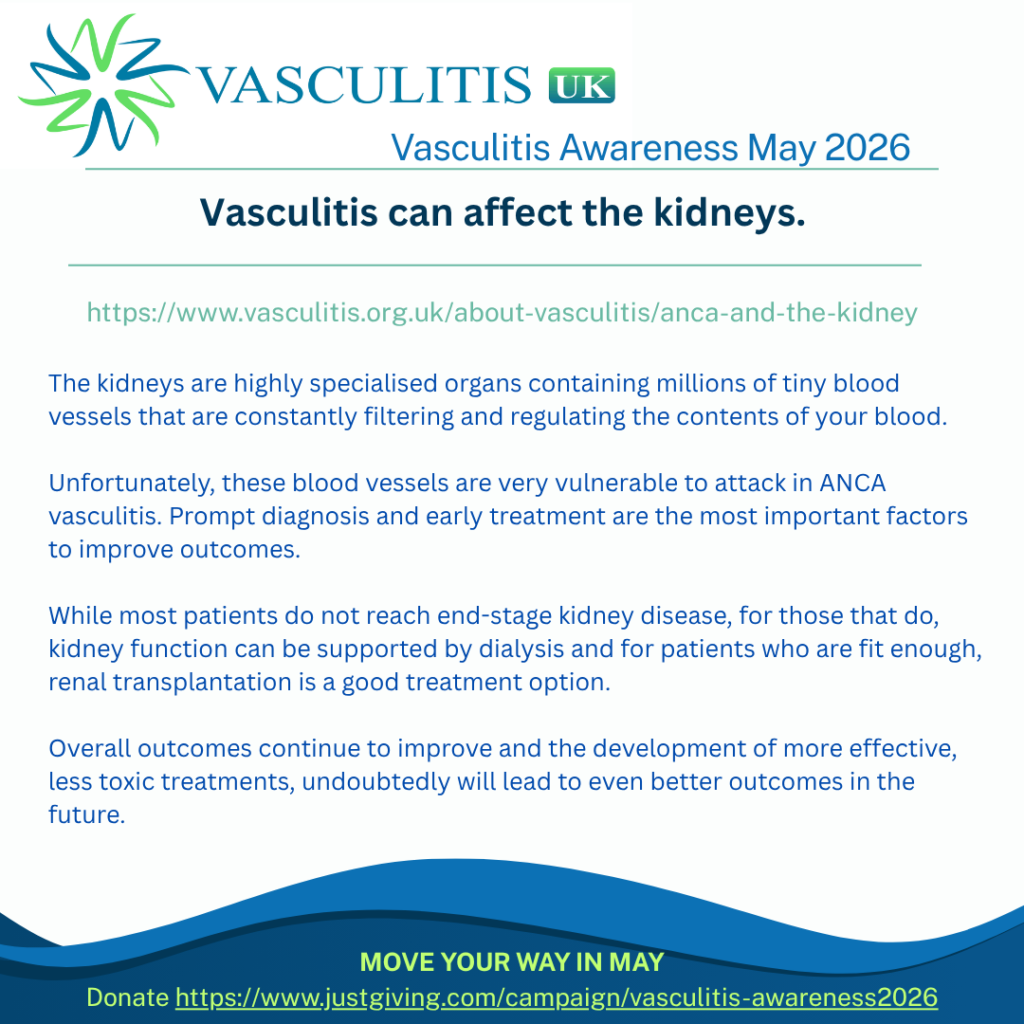
The kidneys are highly specialised organs containing millions of tiny blood vessels that are constantly filtering and regulating the contents of your blood. Unfortunately, these blood vessels are very vulnerable to attack in ANCA vasculitis. Prompt diagnosis and early treatment are the most important factors to improve outcomes. While most patients do not reach end-stage kidney disease, for those that do, kidney function can be supported by dialysis and for patients who are fit enough, renal transplantation is a good treatment option. Overall outcomes continue to improve and the development of more effective, less toxic treatments, undoubtedly will lead to even better outcomes in the future.

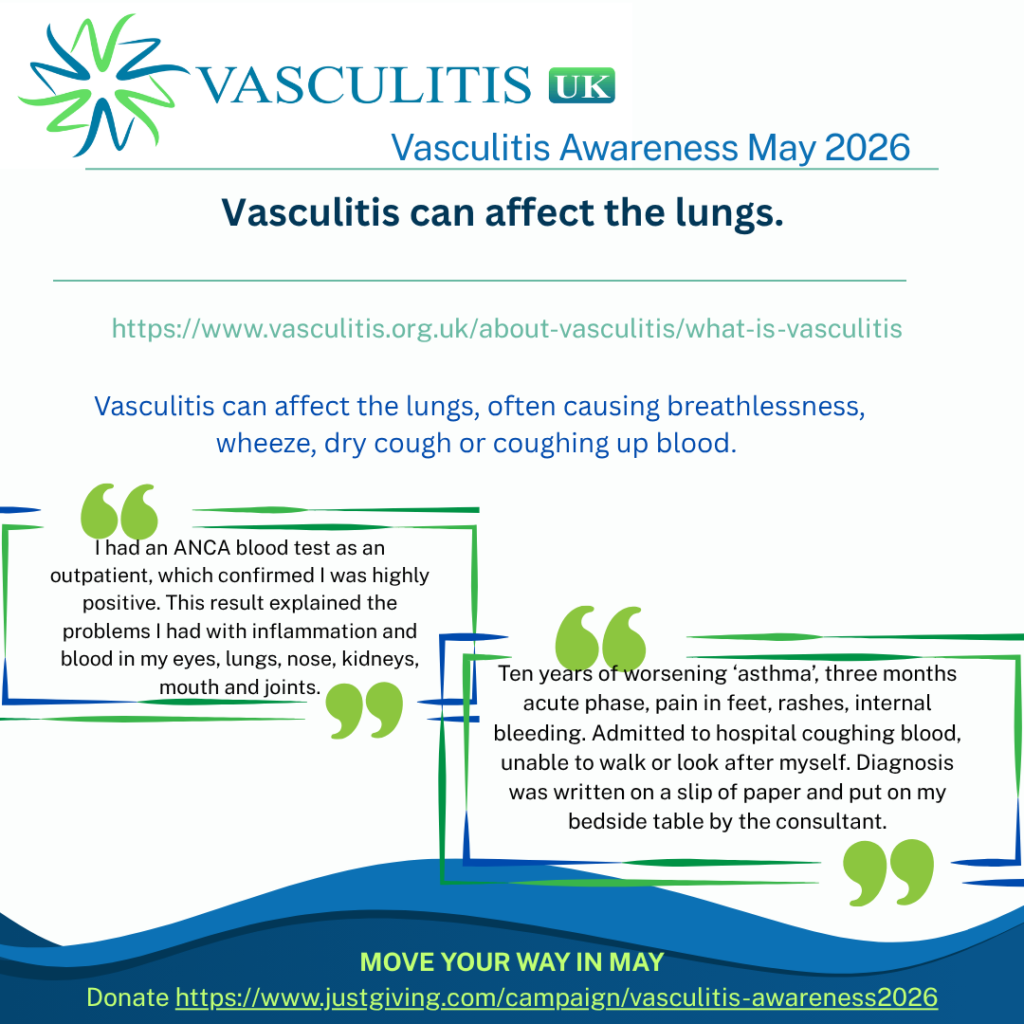
21. Vasculitis can affect the lungs

Vasculitis can affect the lungs, often causing breathlessness, wheeze, dry cough or coughing up blood.