Our final set of Awareness posts

In Uncategorised by John Geddes

Share these wherever you feel appropriate

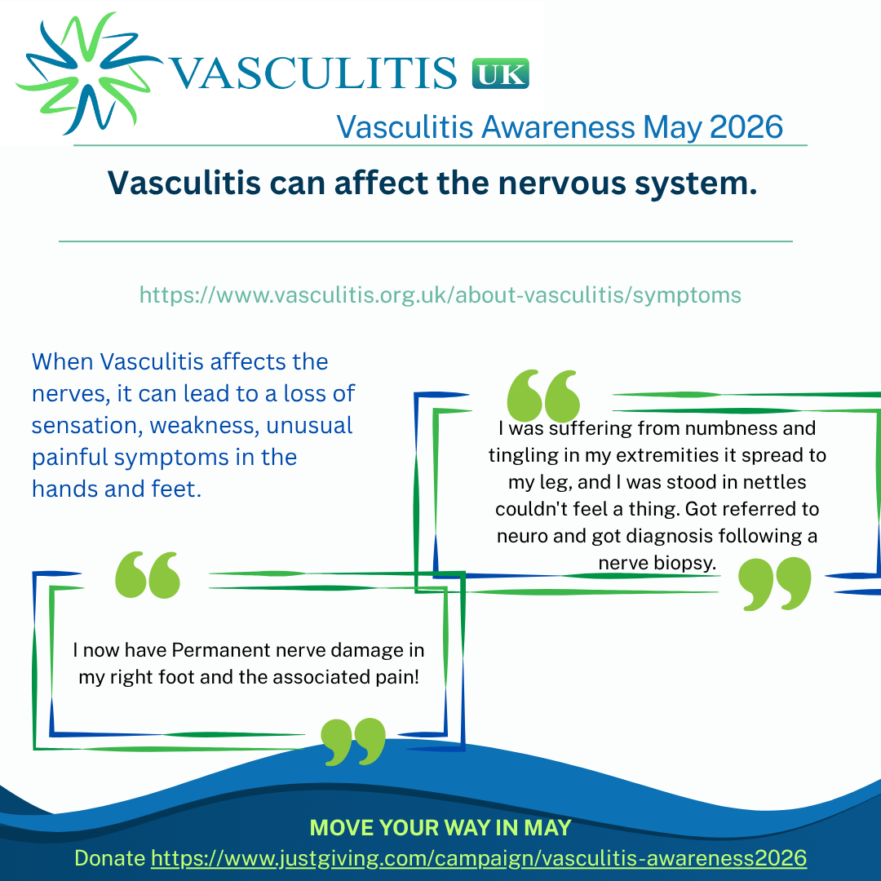
22. Vasculitis can affect the nervous system
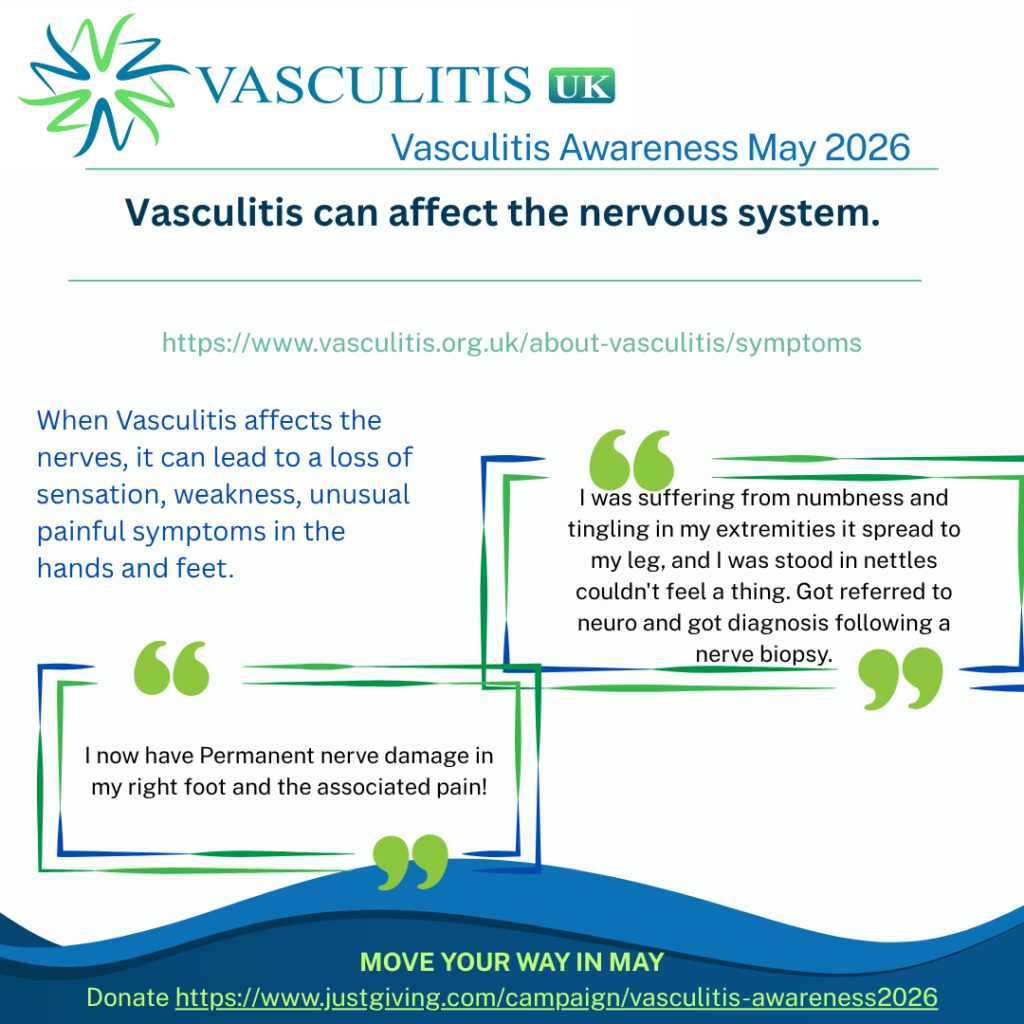
When Vasculitis affects the nerves, it can lead to a loss of sensation, weakness, unusual painful symptoms in the hands and feet.

23. Vasculitis UK shares many stories from people diagnosed with Vasculitis, sharing our stories helps others

The personal and inspirational stories on our dedicated site have been written by vasculitis patients or by a family member. Each story tells of the personal journey of overcoming adversity and learning to live with vasculitis.

24. Blood tests are often used to help diagnose vasculitis
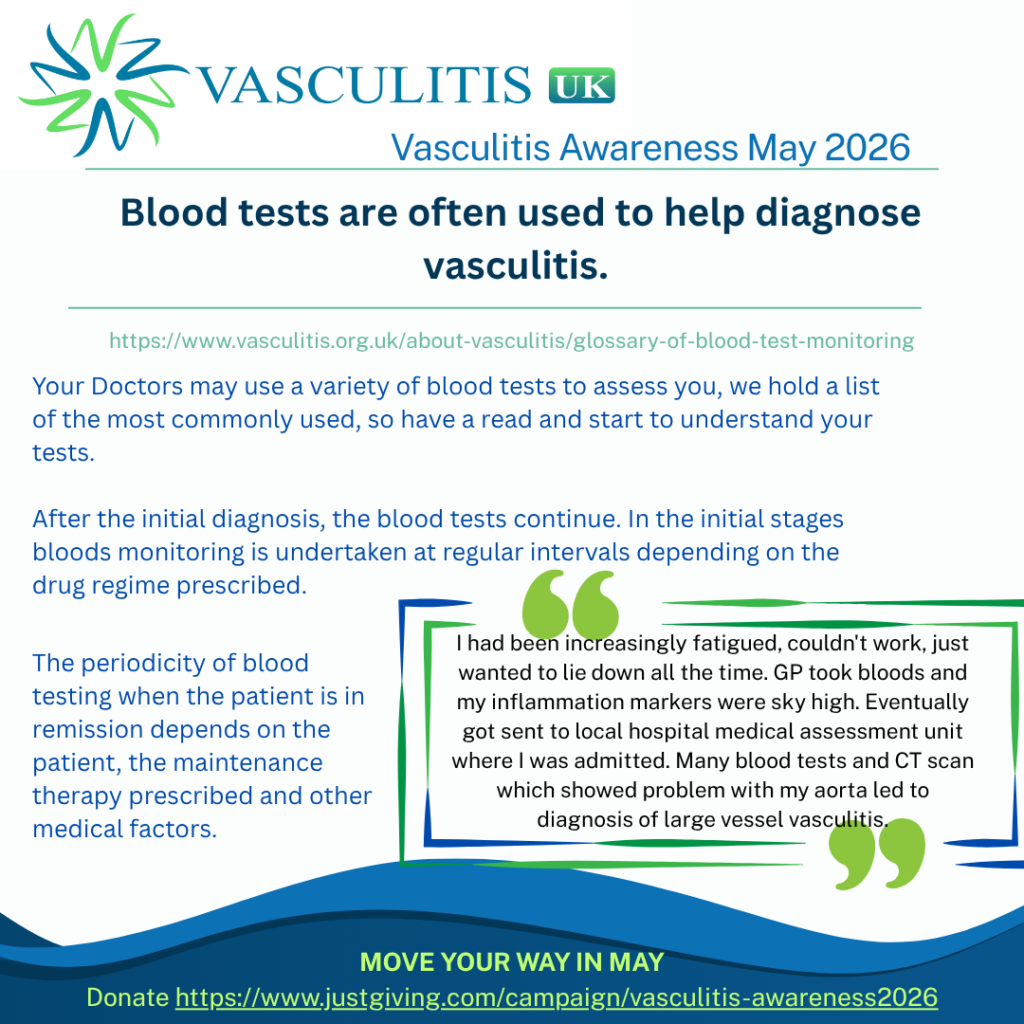
Your Doctors may use a variety of blood tests to assess you, we hold a list of the most commonly used, so have a read and start to understand your tests. And after the initial diagnosis, the blood tests continue. In the initial stages bloods monitoring is undertaken at regular intervals depending on the drug regime prescribed. The periodicity of blood testing when the patient is in remission depends on the patient, the maintenance therapy prescribed and other medical factors.

25. A tissue biopsy is sometimes needed for confirmation. 

A biopsy is a procedure whereby a small piece of tissue is taken from the affected area or organ, e.g. the skin or the kidney. The tissue is then examined by a pathologist and special tests can be done to identify the disease affecting the organ.

26. Vasculitis is usually treated with immunosuppressive medicines. Steroids are commonly used in treatment

Steroids are naturally occurring hormones (cortisol) produced in the body by the adrenal glands and are essential for normal health. Artificial steroids are commonly used to treat vasculitis and other inflammatory diseases and are very effective at reducing inflammation. They are often used initially at high doses to control the disease and then the dose will be reduced as quickly as is possible to reduce the side effects.

27. Research is essential into this rare group of diseases

Vasculitis UK aims to spend at least 50% of annual income on supporting research. We are a small charity depending entirely on donations. As such we must ensure that any research we fund will provide tangible outcomes for our community of vasculitis patients and their families.

28. Treatment often needs long‑term monitoring
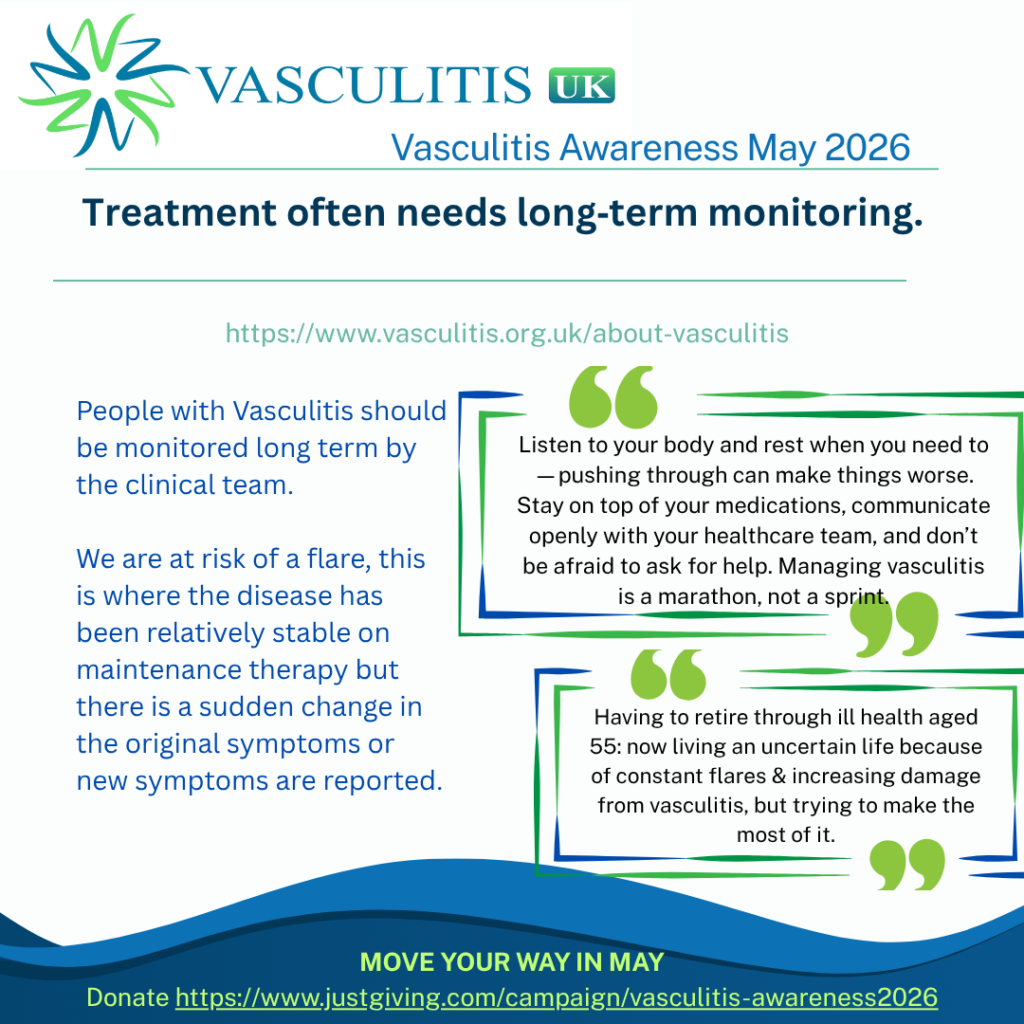
People with Vasculitis should be monitored long term by the clinical team. We are at risk of a flare, this is where the disease has been relatively stable on maintenance therapy but there is a sudden change in the original symptoms or new symptoms are reported.

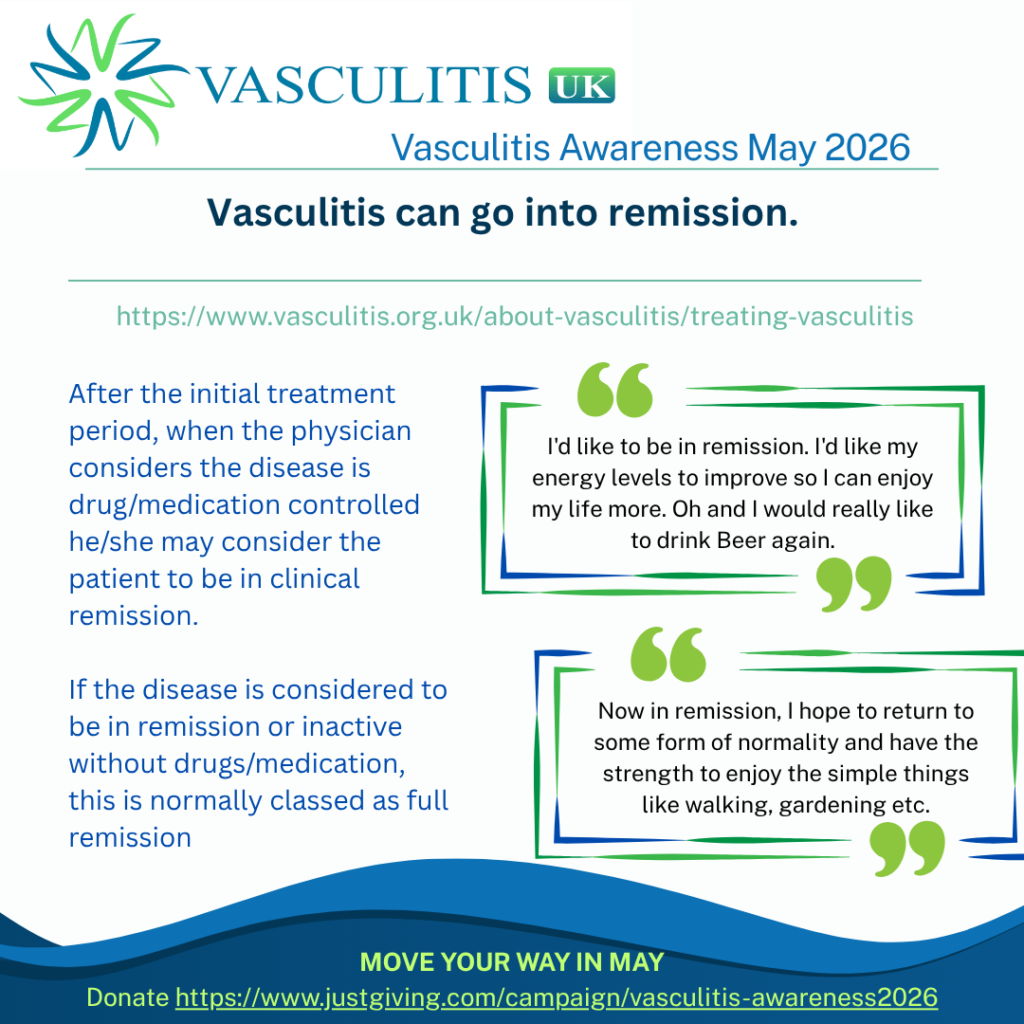
29. Vasculitis can go into remission

After the initial treatment period, when the physician considers the disease is drug/medication controlled he/she may consider the patient to be in clinical remission. If the disease is considered to be in remission or inactive without drugs/medication, this is normally classed as full remission

30. Ongoing support is important for people living with vasculitis

You can contact the Vasculitis UK Helpline for information and advice about vasculitis by telephone or email. If you prefer you can write to us. 0300 365 0075 – we try to answer calls between 10.00 and 18.00 on weekdays and between 10.00 and 14.00 on Saturdays but we are a small team, and on occasions you may hit our messaging service. We check for messages several times per day and will get back to you as soon as we can.

31. Vasculitis UK provides trusted information, helplines and support

The aims of Vasculitis UK are: • To support those suffering from vasculitis diseases and their families by providing information and advice. • To inform and educate those with vasculitis about their illness so that they are empowered to take greater control of it. • To work with other organisations and medical professionals to improve the recognition, diagnosis and treatment of vasculitis diseases. • To raise awareness of vasculitis disease among medical professionals and the general population. • To enable vasculitis sufferers to contact others with vasculitis. • To encourage and support the formation and development of local vasculitis support groups. • To support research into the causes and effects of vasculitis and into improvements in the diagnosis of vasculitis and into treatment of people suffering from different types of vasculitis.