
May is Vasculitis Awareness Month …

In Events by John Geddes

… and we will be sharing facts with you all month.

1.         Vasculitis means inflammation of blood vessels
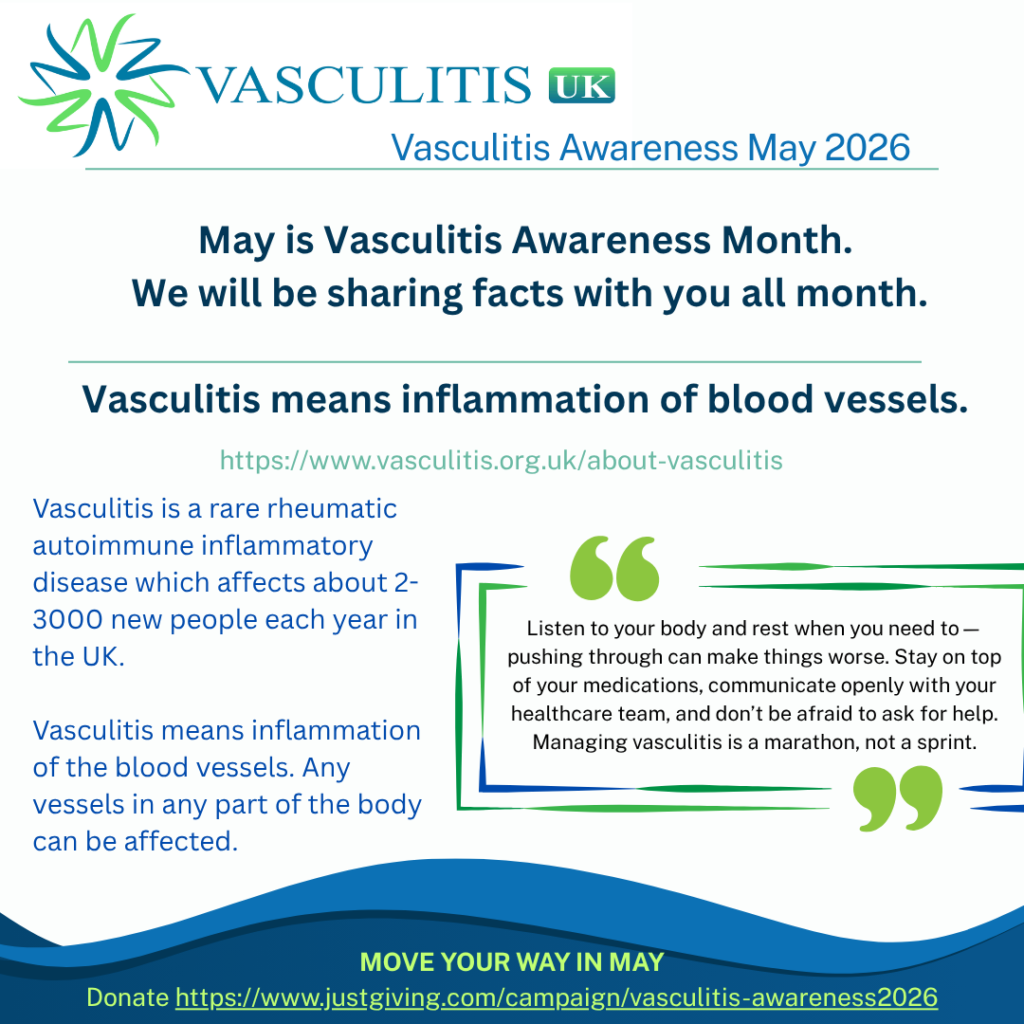
Vasculitis means inflammation of blood vessels. 	
	
Vasculitis is a rare rheumatic autoimmune inflammatory disease which affects about 2-3000 new people each year in the UK. Vasculitis means inflammation of the blood vessels. Any vessels in any part of the body can be affected.

2.         Inflamed blood vessels can become narrowed or blocked, reducing blood flow
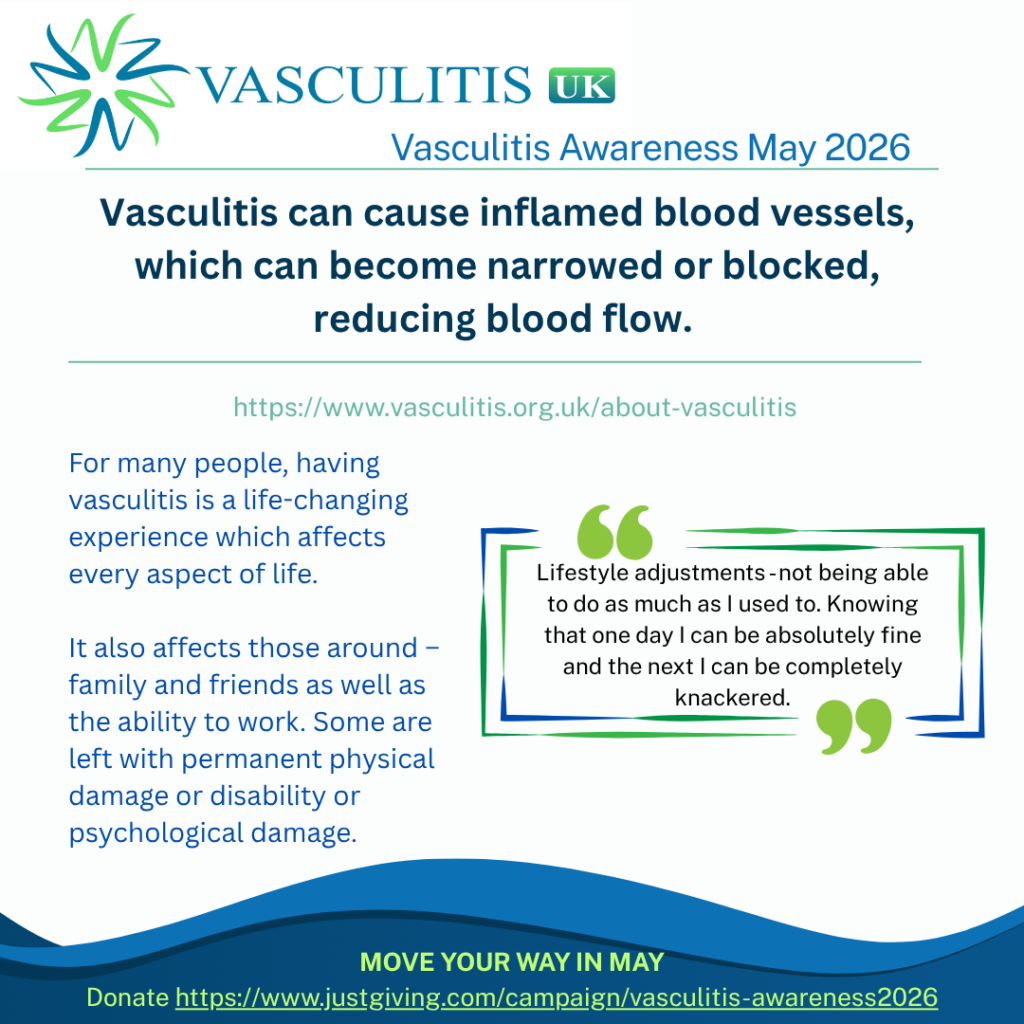
For many people, having vasculitis is a life-changing experience which affects every aspect of life. It also affects those around – family and friends as well as the ability to work. Some are left with permanent physical damage or disability or psychological damage.

3         Vasculitis is not a single disease but a group of related conditions. 
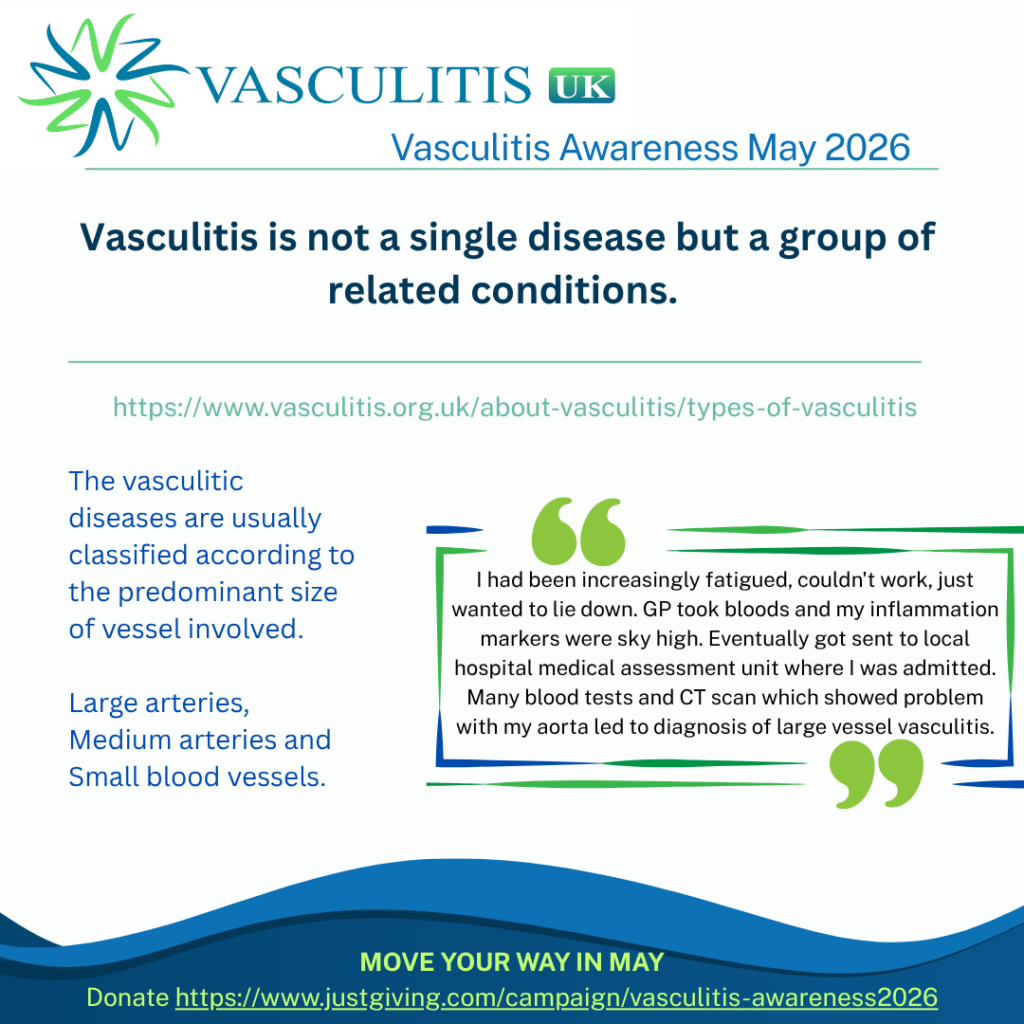
The vasculitic diseases are usually classified according to the predominant vessel size involved. Large arteries, Medium arteries and Small blood vessels.

4.         There are many different types of vasculitis.
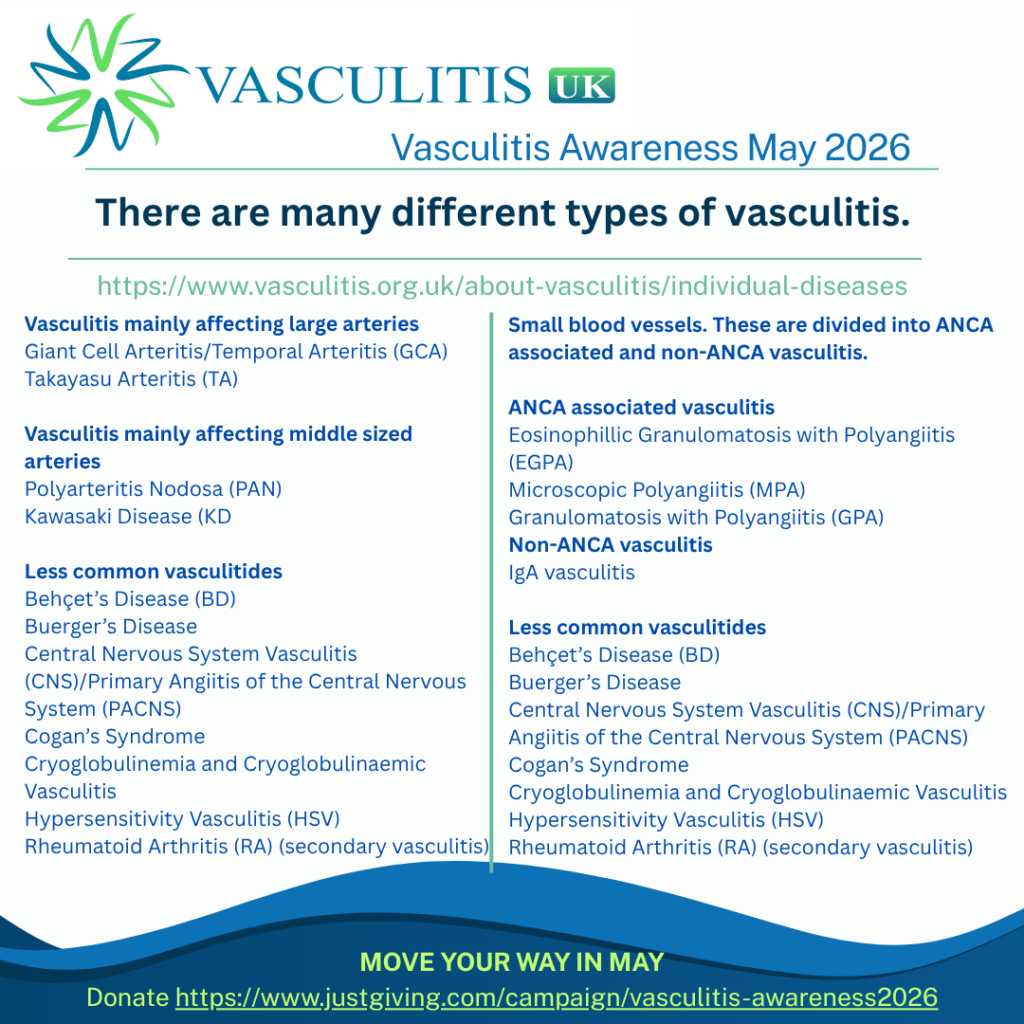
Vasculitis mainly affecting large arteries:
•	Giant Cell Arteritis/Temporal Arteritis (GCA)
•	Takayasu Arteritis (TA)
•	Vasculitis mainly affecting middle sized arteries
•	Polyarteritis Nodosa (PAN)
•	Kawasaki Disease (KD

Diseases affecting the small blood vessels, these are divided into ANCA associated vasculitis and non-ANCA vasculitis.
ANCA associated vasculitis:
•	Eosinophillic Granulomatosis with Polyangiitis (EGPA)
•	Microscopic Polyangiitis (MPA)
•	Granulomatosis with Polyangiitis (GPA)
Non-ANCA vasculitis:
•	IgA vasculitis

Less common vasculitides:
•	Behçet’s Disease (BD)
•	Buerger’s Disease
•	Central Nervous System Vasculitis (CNS)/Primary Angiitis of the Central Nervous System (PACNS)
•	Cogan’s Syndrome
•	Cryoglobulinemia and Cryoglobulinaemic Vasculitis
•	Hypersensitivity Vasculitis (HSV)
•	Rheumatoid Arthritis (RA) (secondary vasculitis)

5.          Vasculitis can affect any organ in the body
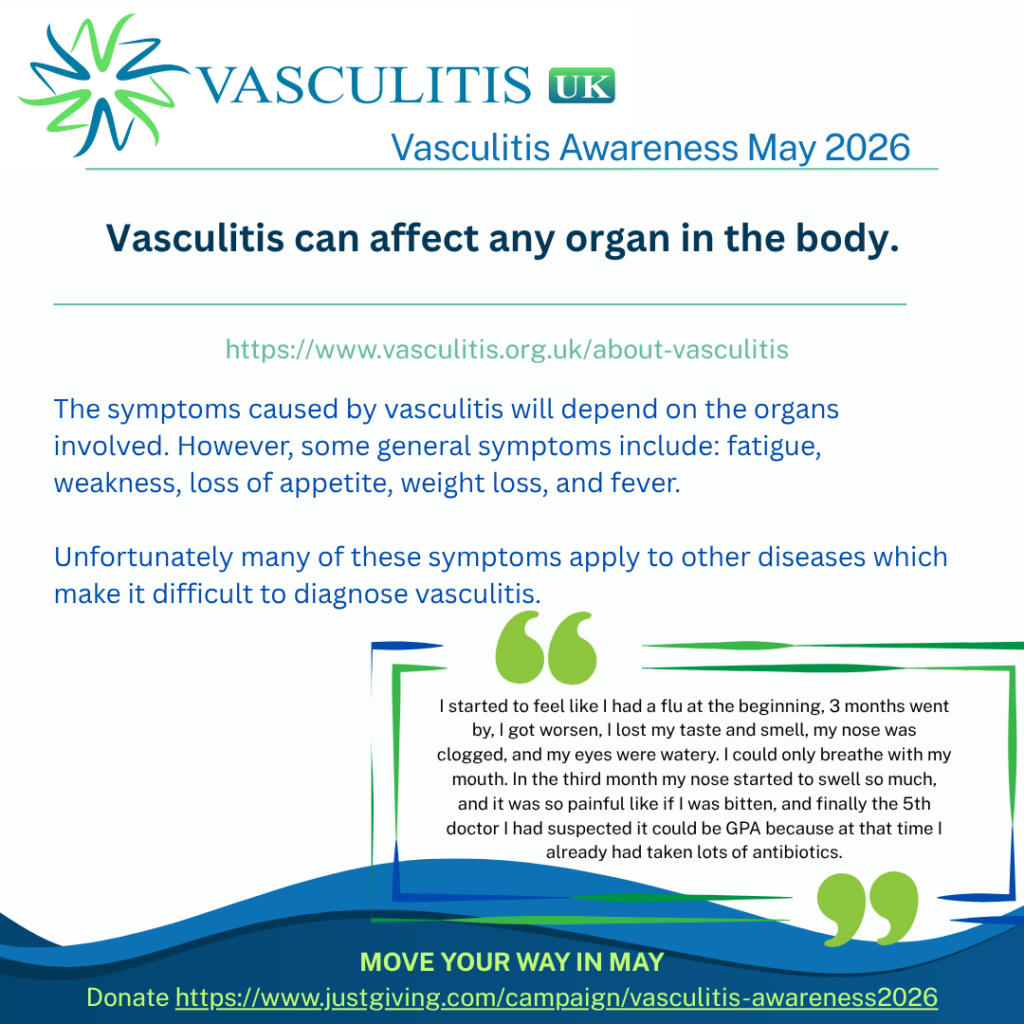
The symptoms caused by vasculitis will depend on the organs involved. However, some general symptoms include: fatigue, weakness, loss of appetite, weight loss, and fever. Unfortunately many of these symptoms apply to other diseases which make it difficult to diagnose vasculitis.

6.          Some forms of vasculitis affect small blood vessels
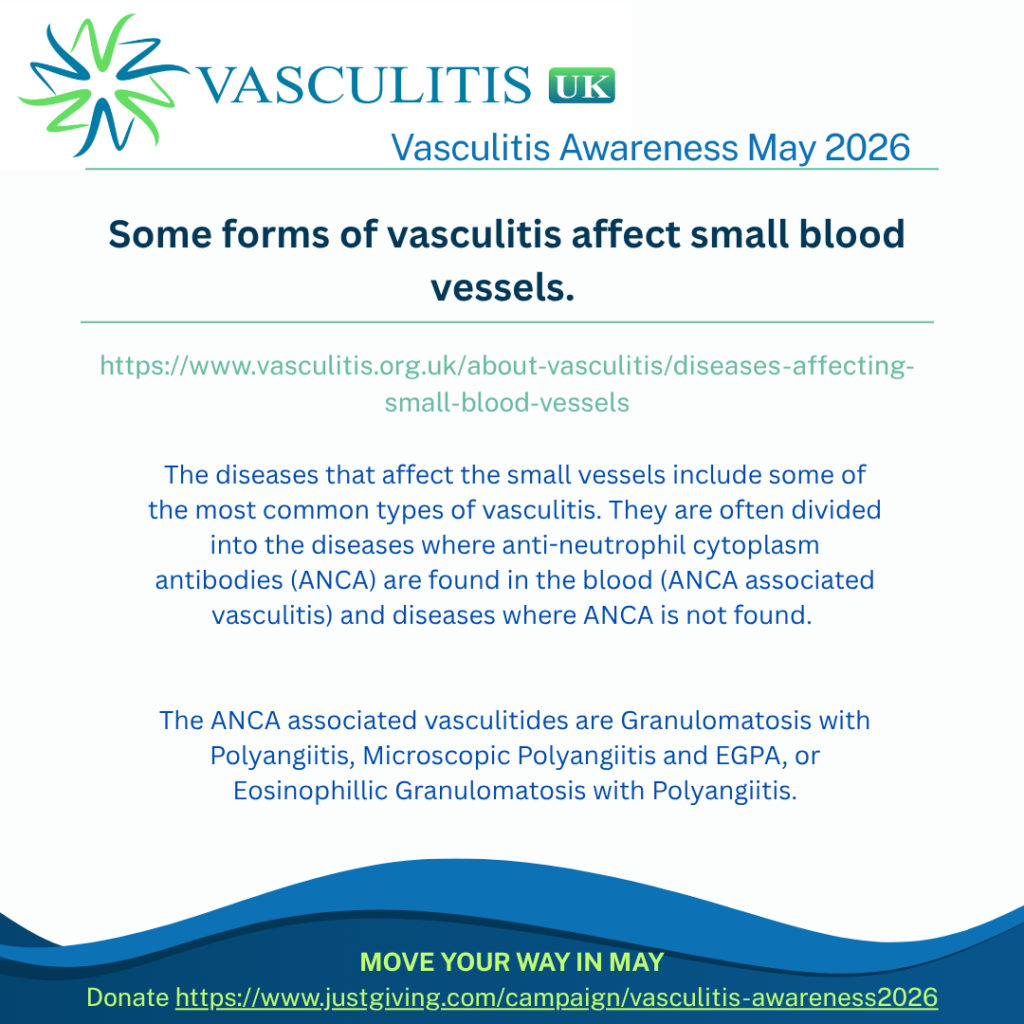
The diseases that affect the small vessels include some of the most common types of vasculitis. They are often divided into the diseases where anti-neutrophil cytoplasm antibodies (ANCA) are found in the blood (ANCA associated vasculitis) and diseases where ANCA is not found. The ANCA associated vasculitides are Granulomatosis with Polyangiitis, Microscopic Polyangiitis and EGPA, or Eosinophillic Granulomatosis with Polyangiitis.

7.          Other forms of vasculitis affect medium or large blood vessels
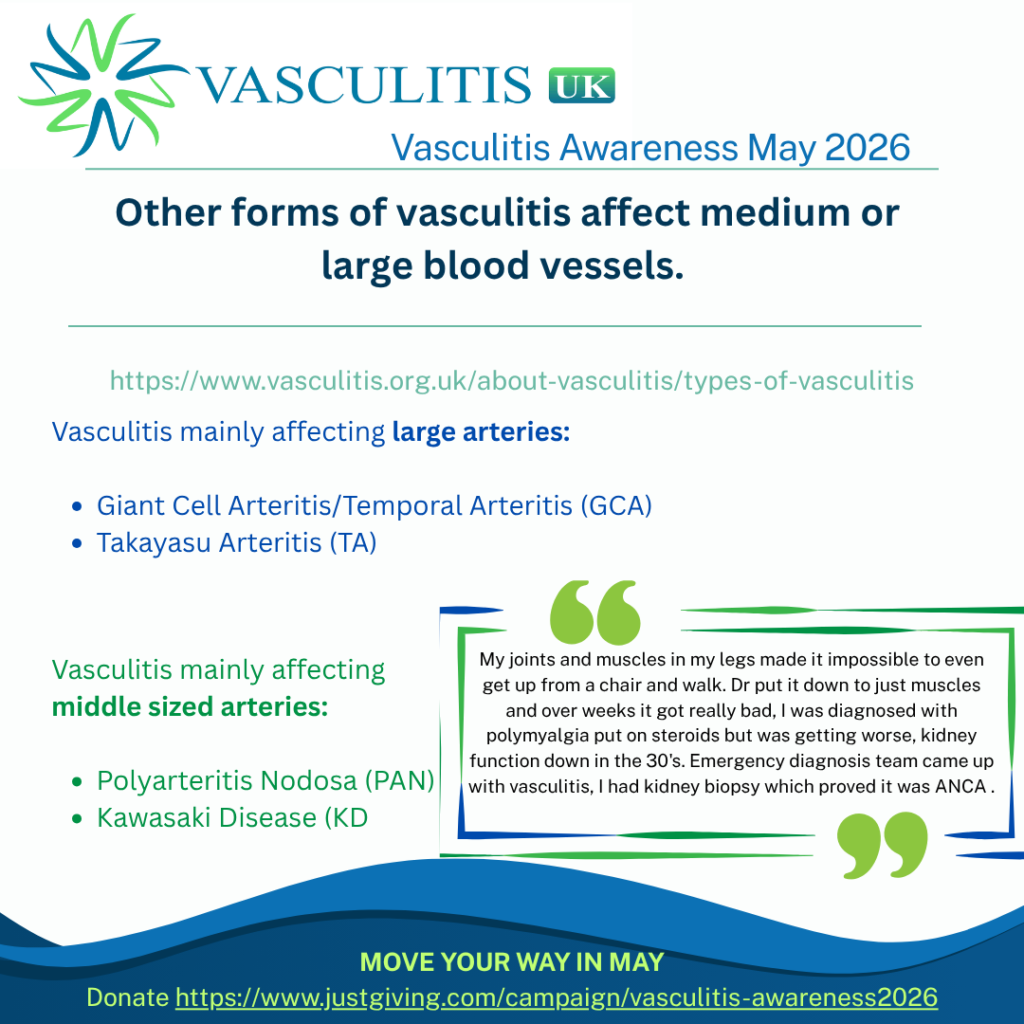
Vasculitis mainly affecting large arteries:
•	Giant Cell Arteritis/Temporal Arteritis (GCA)
•	Takayasu Arteritis (TA)
•	Vasculitis mainly affecting middle sized arteries
•	Polyarteritis Nodosa (PAN)
•	Kawasaki Disease (KD)